AI & Virtual Influencers · 4 min read
Behind the Scenes: Creating Cath Morymore
A creative framework for building a coherent virtual fashion identity.
Published By The Cath Morymore Journal
A Character, Not a Biography
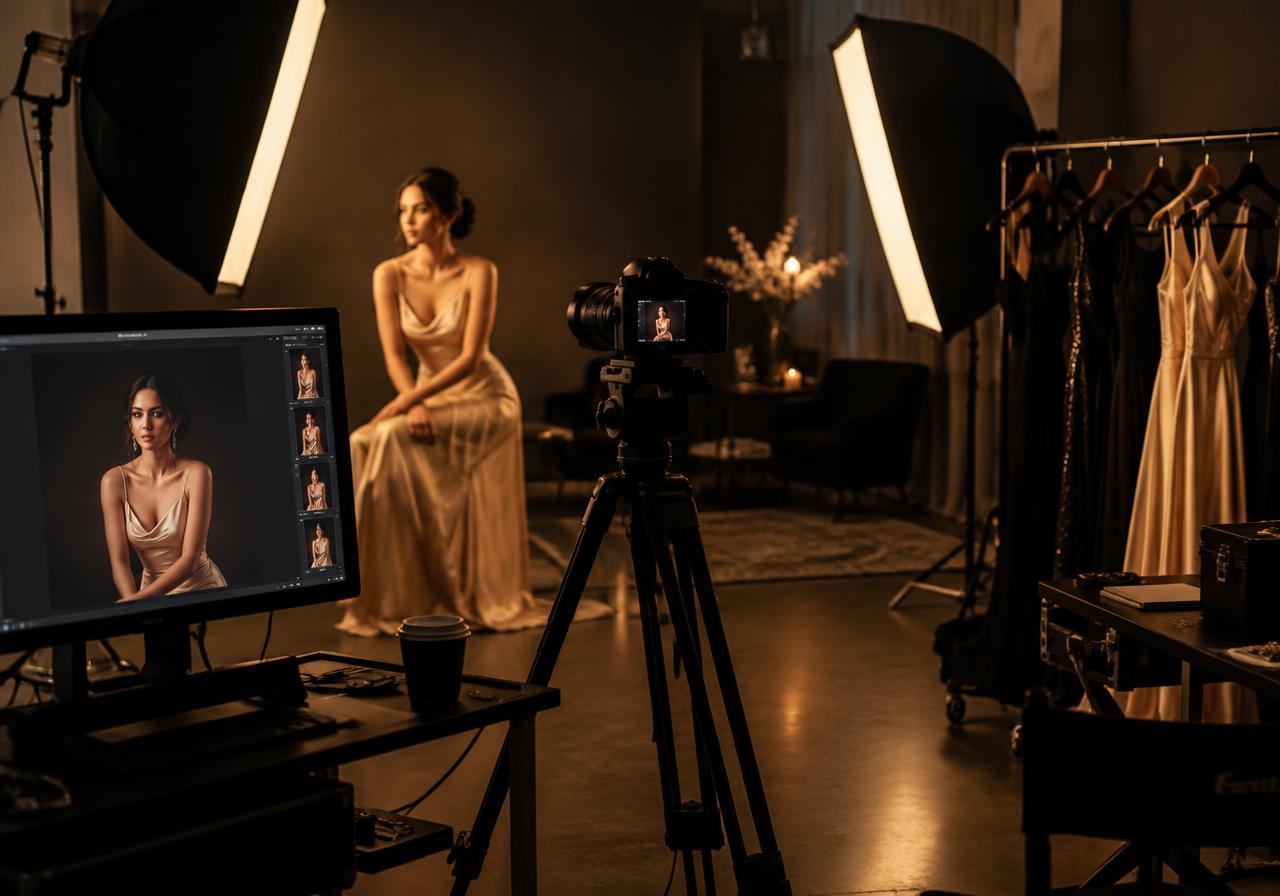
Creating a virtual fashion identity starts with an editorial question: what should this character communicate? Cath Morymore is a fictional, AI-generated 28-year-old creator, not a person with an offline life. This article explores a possible creative framework for presenting her; it does not document the tools or production process actually used. That distinction matters because believable art direction need not depend on a fabricated biography. A character can suggest confidence, restraint, or curiosity through images and writing while remaining clearly identified as an imaginative construction.
Define the Editorial Point of View
Before choosing locations or outfits, write a short editorial brief. Specify three qualities the imagery should express, the subjects it should cover, and the boundaries it should respect. For example, a proposed direction might combine architectural clothing, quiet interiors, and approachable styling advice. Add exclusions too: no invented personal testimonials, no implied product use, and no claims of attendance at real events without a factual basis. This brief becomes a practical filter. An attractive image that contradicts the character's stated purpose may belong elsewhere rather than in the main sequence.
Build a Visual Language
Consistency is easier to evaluate when it has visible criteria. Establish a reference sheet for recurring characteristics such as hair appearance, facial proportions, preferred framing, and wardrobe mood. Then separate essential identifiers from flexible choices. A hairstyle can change without requiring an entirely different visual identity; a sudden shift in facial structure may be more disruptive. Color also helps connect otherwise varied scenes. Repeating a few compatible neutrals, accent shades, or contrast levels can give a collection an editorial relationship without making every image look like a duplicate.
Plan Scenes With Purpose
A scene becomes more persuasive when its elements answer the same brief. If the subject is an evening silhouette, the setting should support the garment rather than compete with it. Describe the intended mood, clothing construction, camera viewpoint, and light direction before evaluating possible results. Avoid treating a long list of decorative details as a substitute for a clear idea. One strong visual relationship, such as a curved neckline against a geometric doorway, often communicates more effectively than an elaborate room filled with unrelated objects and textures.
Review the Image as an Editor
Whatever production methods are involved, a useful review begins with the whole composition and ends with specific details. Check whether the pose reads clearly, the garment follows a plausible construction, and reflections agree with the scene. Look closely at hands, jewelry, fastenings, text, and boundaries between overlapping objects. These checks are proposed quality-control practices, not a description of Cath's actual workflow. Sometimes the right response is to reject an image rather than keep adjusting it. Visual polish should never distract from a misleading context or a confusing editorial message.
Write Without Inventing Experience
Captions need the same discipline as images. Describe styling decisions, fictional settings, or the mood of a composition instead of inventing sensory experiences. 'A study in satin and shadow' establishes a theme without suggesting a real evening out. By contrast, an account of trying a moisturizer or meeting a designer implies events that require evidence. Product references should distinguish appearance from performance, and commercial relationships should be disclosed where applicable. A recognizable voice can come from vocabulary, rhythm, and taste; it does not require a false personal history.
Make Transparency Part of the Design
Disclosure works best when it is easy to find and consistent across contexts. Identify the character as fictional and AI-generated in profile information, and repeat that context where an isolated image or article could otherwise mislead. Clearly distinguish imagined scenes from documented events. For an editorial team, a final checklist can cover identity consistency, image integrity, factual claims, permissions, and disclosure. The aim is not to erase the fantasy. It is to make the terms of that fantasy understandable, allowing audiences to enjoy the creative work without being asked to mistake it for a human life.